


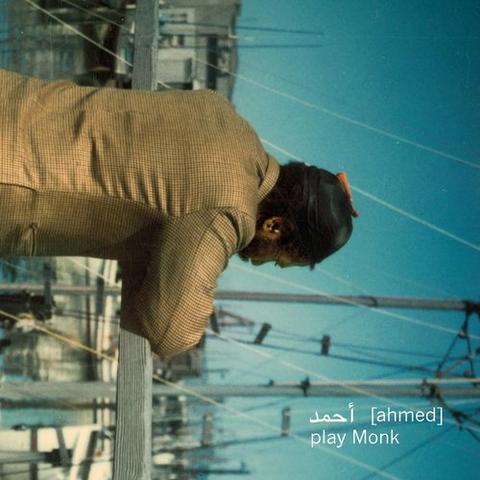
Artist: أحمد [Ahmed]
Album: Play Monk
Genre: Avant-Garde Jazz, Free Improvisation
Label: Otoroku
Released: 2026
Quality: FLAC (tracks+.cue)
Tracklist:
CD 1:
01. Bye-Ya/Epistrophy (20:44)
02. Friday the Thirteenth (26:00)
03. Round Midnight (25:17)
CD 2:
01. Epistrophy (7:36)
02. Evidence (29:30)
03. Oska T (20:04)
DOWNLOAD FROM FILECAT.NET >>>
Personnel:
Pat Thomas - piano
Joel Grip - double bass
Antonin Gerbal - drums
Seymour Wright - alto saxophone
Few contemporary bands dismantle Thelonious Monk's charts with either the conviction or the discipline displayed by حمد [Ahmed] on Play Monk. This double CD veers between primal throb and cerebral cool. Pianist Pat Thomas, alto saxophonist Seymour Wright, bassist Joel Grip and drummer Antonin Gerbal united around a shared affection for the work of pioneering bassist and oud player Ahmed Abdul-Malik, whose late '50s albums introduced Arab and East African modes into the hard bop milieu. Although they seemed an oddity at the time, they have proven fertile soil for re-evaluation and experimentation.
This outing marks the foursome's first departure from Abdul-Malik's repertoire. However, as the bassist featured in Monk's group at times alongside both Johnny Griffin or John Coltrane, this sideways leap is not completely off-the-wall. Monk's asymmetrical melodies and abrupt rhythmic displacements lend themselves unusually well to Ahmed's method of incremental transformation.
Thomas has long acknowledged Monk's place in his personal pantheon. His staccato delivery, fondness for dissonance and percussive attack situate him firmly within a lineage that also takes in Duke Ellington, Cecil Taylor and Mal Waldron, as he emphasizes weight, texture and frequent repetition of a single note or curt pattern.
Wright's foghorn blurts, rattling plosives and purposefully harsh tone forge a similarly treacherous path. While adventurous practitioners like early Steve Lacy, Evan Parker, and Japanese iconoclast Kaoru Abe might be forebears, he sounds like few others. Although unobtrusive, Grip and Gerbal prove crucial to the unit's success. They imbue steady tempos with a whiff of sulphur, in a supercharged velocity that snares head bangers and foot tappers alike.
Instead of full theme expositions, Ahmed subtly modulates every component—timbre, pitch and meter. The effect is hypnotic, a jumping needle perpetually wearing a furrow. Their self-imposed economy becomes a source of relentless impetus, a bludgeoning juggernaut that owes as much to doom metal and Black Sabbath as Steve Reich.
Most pieces emerge from some element of the tune. Wright tempers his caress of the familiar contours of "'Round Midnight" with distorted honks, shadowed by Grip's woozy arco asides and Gerbal's cymbal wash in a lovely intro, until a simple piano motif prompts momentum and a gradual loosening of the moorings. Grip and Gerbal stick close to the Latin groove of "Bye-Ya," and even when the digressions become inescapable, they maintain buoyancy. In contrast, the second version of "Epistrophy" is dense and compressed, as if walking in halfway through an argument that's been going on for some time. At the same time "Evidence" unfurls from an unrelenting piano riff and rumbling bass and drums, before Wright splinters the theme.
Although occasional passages of treading water unfold during the two-hour-plus program, like in the transition from "Bye-Ya" to the first version of "Epistrophy," for the most part this is a remarkable feat of sustained focus, unbounded energy and spontaneous (re)composition. Monk's music has long rewarded musicians willing to risk getting lost inside it. Ahmed ventures farther than most, and returns with something that eschews repertory for uncompromising discovery.
Review by John Sharpe